
Surkanda Devi is a sacred Himalayan temple dedicated to Goddess Sati and is believed to be one of the 51 Shakti Peethas. It is famous for its spiritual atmosphere and stunning mountain views. High among the Himalayan clouds stands Surkanda Devi a temple where legend, devotion, and nature unite. Here, prayers rise with the mist and faith finds peace in the silence of the mountains.
“Surkanda Devi: Where Faith Meets the Clouds”

Surkanda Devi is a highly revered Hindu temple located near Dhanaulti in Uttarakhand, perched at an altitude of about 2,700 meters. Dedicated to Goddess Sati, it is believed to be one of the 51 Shakti Peethas sacred sites where fragments of Sati’s body are said to have fallen. The temple is accessed via a 2-kilometer uphill trek from Kaddukhal, offering breathtaking views of the Garhwal Himalayas and dense forests along the way.
Known for its spiritual atmosphere, panoramic mountain vistas, and cultural significance, Surkanda Devi attracts both pilgrims and nature lovers throughout the year. The site becomes especially vibrant during festivals like Ganga Dussehra and Navratri, when thousands of devotees visit to seek blessings.
Surkanda Devi: Where Faith Meets the Clouds
Tucked high in the Garhwal Himalayas, where the sky brushes the peaks and the winds carry whispers of ancient devotion, stands the revered Surkanda Devi Temple. At an altitude of about 2,700 meters, near Dhanaulti and Kaddukhal in Uttarakhand, this sacred shrine is not just a destination it is an experience, a union of nature, mythology, and unshaken faith. Visitors often say that Surkanda Devi is not merely reached by foot, but by heart.
The journey begins at Kaddukhal, the base point where the trail to the temple unfolds as a steep but rewarding trek of nearly 2 kilometres. The pathway climbs through dense forests of oak, deodar, and rhododendron, opening from time to time to reveal vast Himalayan vistas. For every pilgrim, the trek becomes a personal pilgrimage. The quiet rustle of trees, the cool mountain air, and the sight of far-stretching ridges create an atmosphere where the physical effort becomes a spiritual ascent. Many pauses along the way not out of fatigue, but to absorb the stillness that seems to belong only to the mountains. CLICK HERE TO ACCESS THE OFFICIAL LINK
Surkanda Devi Temple is deeply rooted in Hindu mythology. It is believed to be one of the 51 Shakti Peethas, the places sanctified by the fragments of Goddess Sati’s body after Lord Shiva carried her across the universe in grief. Legend says that Sati’s head fell at this very hill, blessing the land with divine feminine energy. Every prayer, every bell chime at the temple echoes this ancient legacy of devotion, sacrifice, and eternal love.

Reaching the summit, visitors are greeted by fluttering prayer flags, the scent of incense, and the majestic temple built in classic Garhwali architectural style. From here, the world below seems distant valleys, rivers, and towns spread like a woven tapestry, with the mighty snow-clad peaks watching silently from afar. On clear days, the panoramic view extends across the Himalayan range, including Bandar Poonch, Chau Khamba, and Nanda Devi. It is a sight that humbles even the most seasoned traveller.
The temple is known not just for mythological significance but also for its spiritual vibrancy. During festivals especially Ganga Dussehra and Navratri thousands of devotees gather to seek blessings. The air comes alive with chants, music, and dance, transforming the mountain top into a celebration of faith. Yet even during quiet months, Surkanda Devi retains its aura. A simple offering, a silent prayer, or a moment of stillness is enough to feel a deep connection between oneself and the universe.
Surkanda Devi is also treasured by nature lovers. At dawn, golden sunlight touches the peaks like a blessing. At dusk, clouds drift across the hilltop, giving the surreal feeling of standing among the heavens. Winters bring snowfall, turning the temple surroundings into a serene white wonderland. Every season paints the landscape differently, yet the spiritual calm remains unchanged.
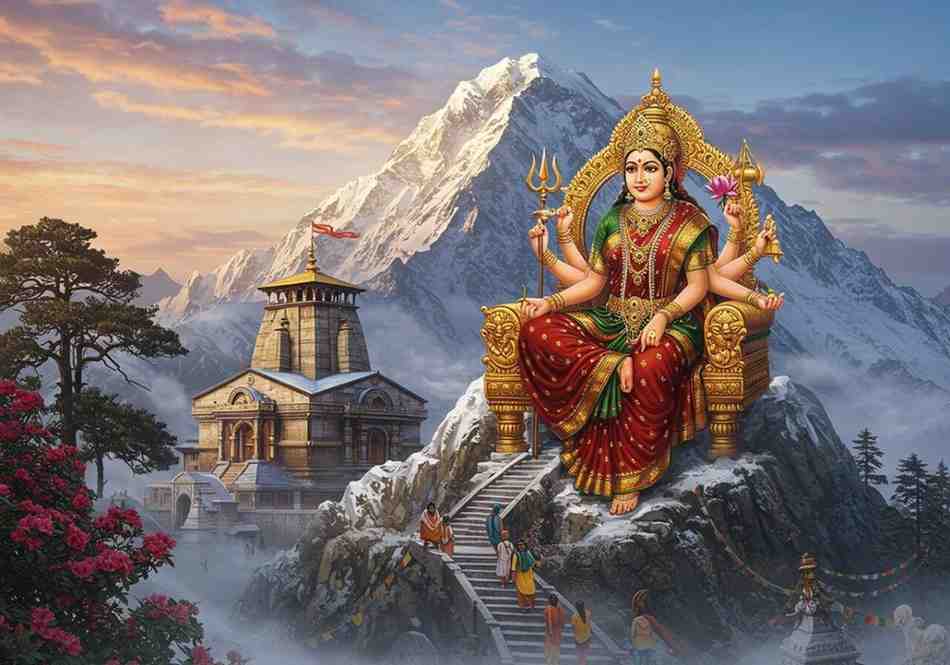
Although the journey demands effort, the destination gives much more in return. Visitors often say they arrive with tired limbs but leave with a lighter soul renewed, grounded, and grateful. It is not only the mythological energy but also the powerful symbolism of the climb: each step reflecting resilience, surrender, and hope.
Surkanda Devi is a reminder that even in a fast-moving world, certain places remain untouched where mountains protect faith, myths live through whispers, and the heart finds peace simply by being present.


